Vertical Transportation: A Guide to Professional Elevator & Escalator Installation
Ensuring Safety, Efficiency, and Modern Connectivity
1. The Planning and Site Preparation Phase
In modern architecture, the installation of elevators and escalators is a critical infrastructure requirement. Success begins long before the equipment arrives at the site.
Key Pre-Installation Requirements:
Site Survey: Verifying hoistway dimensions and pit depth to match technical drawings.
Structural Integrity: Ensuring the building can support the static and dynamic loads of the machinery.
Electrical Provisions: Setting up dedicated power supplies, grounding, and backup generators.
Comparison of Systems | Feature | Elevator Installation | Escalator Installation | | :--- | :--- | :--- | | Space Required | Vertical Shaft (Hoistway) | Large Floor Openings & Trusses | | Primary Focus | High-speed multi-floor travel | Continuous high-volume traffic | | Structural Impact | Load-bearing at top/bottom | Load-bearing at floor supports |
2. The Installation Process
The installation phase is divided into several technical stages. Each stage must be verified by a certified engineer.
A. Mechanical Assembly
Guide Rail Installation: The tracks that guide the car must be perfectly plumb. Even a 1mm deviation can cause vibrations.
Driving Machine Setup: Placing the motor and sheave in the machine room or at the top of the shaft (for MRL models).
The Truss (For Escalators): The structural frame is hoisted into place using heavy-duty cranes and secured to the floor beams.
B. Electrical and Safety Systems
Modern systems utilize Microprocessor Controllers. Wiring involves connecting:
The Car Operating Panel (COP).
Hall call buttons on every floor.
Safety Sensors: Infrared door curtains and overspeed governors.
3. Testing, Safety, and Maintenance
Before any passenger steps inside, the system undergoes a rigorous Load Test. This involves filling the car with weights exceeding its rated capacity.
Safety Checklist
Overspeed Governor: Ensures the brakes trigger if the car drops too fast.
Emergency Intercom: Must be connected to a 24/7 monitoring center.
Limit Switches: Prevents the car from traveling past the top or bottom floors.
Long-Term Maintenance
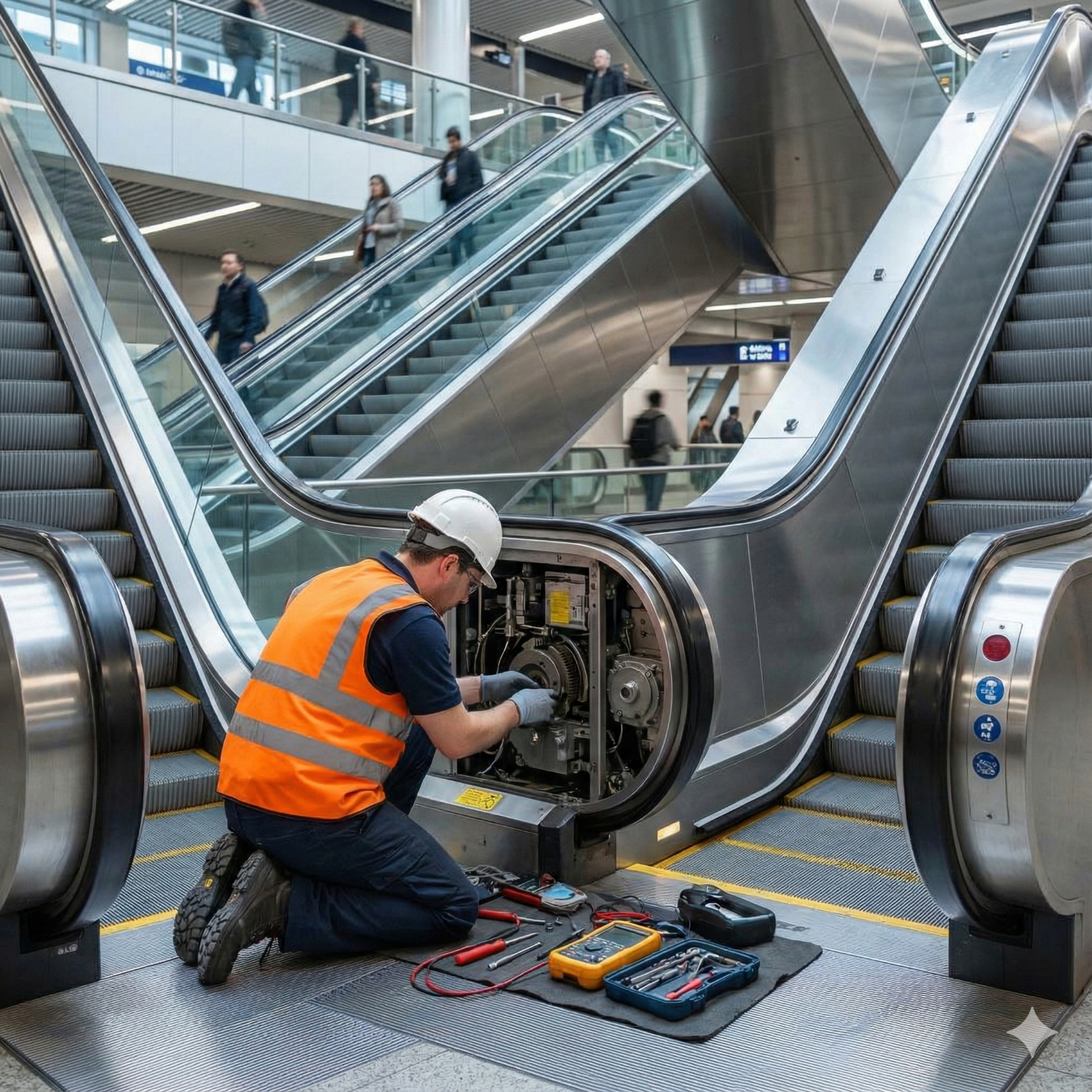
Post-installation, a Preventative Maintenance Agreement (PMA) is essential. Regular lubrication, tension adjustments, and software updates extend the equipment's lifespan by decades.
Conclusion: Installing vertical transportation is a complex marriage of engineering and design. By following strict protocols, building owners ensure safety, longevity, and a smooth user experience.